Hard Breast Implants?
Focused Shockwave Therapy (ESWT) for Capsular Contracture — Las Vegas’s Only Dedicated Non-Surgical Breast Encapsulation Treatment
If your breast implants feel firm, tight, or look distorted, you may be experiencing capsular
contracture — the most common long-term complication of breast augmentation surgery.
Thousands of Las Vegas women deal with it every year, and the majority are told surgery is
their only option.
It isn’t.
At Las Vegas Aesthetics, Thomas Pulice, PA-C treats capsular contracture non-surgically using
Focused Extracorporeal Shockwave Therapy (ESWT). This clinically validated technology uses
targeted acoustic energy to soften hardened scar tissue, restore implant mobility, reduce
inflammation, and help prevent further encapsulation — all without anesthesia, incisions, or
downtime.
Six to twelve sessions. No surgery. Results that speak for themselves.

When a breast implant is surgically placed, the body naturally forms a thin layer of scar tissue
around it — called a capsule. This is normal and expected. But in 10–20% of breast
augmentation patients, that capsule thickens, tightens, and begins to constrict the implant. That
process is called capsular contracture, also known as breast encapsulation.
Las Vegas is home to tens of thousands of performers, entertainers, dancers, and hospitality professionals whose appearance is part of their career. It also has one of the highest per-capita breast augmentation rates in the country — which means a very large local population of
women living with implants, and in many cases, living with encapsulation. Capsular contracture doesn’t care about your show schedule. Shockwave therapy gives this community a non-surgical option with zero downtime — treatment on Tuesday, back on stage Wednesday.
Capsular contracture is graded on the Baker Scale:
• Grade I — breast is soft and looks natural
• Grade II — breast is slightly firm; appearance is normal
• Grade III — breast is firm and visibly distorted; may be uncomfortable
• Grade IV — breast is hard, painful, and significantly misshapen
Shockwave therapy produces the most reliable results at Grades I and II. Grade III is a
judgment call — results vary and are less predictable, but a trial is often worthwhile before
committing to surgery. Grade IV capsules are unlikely to respond to ESWT and typically require
surgical intervention. Early treatment matters.
Extracorporeal Shockwave Therapy delivers precisely targeted acoustic energy pulses into the
tissue surrounding the breast implant. These pulses:
• Break down and soften hardened scar tissue (collagen fibers) in the capsule
• Stimulate angiogenesis — the formation of new blood vessels — to improve oxygenation
• Reduce chronic inflammation driving further capsule formation
• Trigger the body’s natural healing cascade to replace rigid tissue with healthy, flexible tissue
• Exhibit antimicrobial effects, addressing one known contributor to capsule development
• Enhance nerve sensitivity and tissue responsiveness in the treated breast
Treatments are delivered in a series of six sessions, typically spaced 1–2 days apart and
completed within 6–10 days. Sessions last approximately 15–20 minutes. No anesthesia. No
downtime. Patients return to normal activity immediately.
For out-of-town patients — including those traveling from other states for treatment — all six
sessions can be completed in a single Las Vegas trip.
Clinical outcomes depend on grade, severity, and how long the capsule has been developing. Grade I and II respond well. Grade III is case-by-case — severity and duration matter. Grade IV is a surgical case. Tom will tell you honestly which category you’re in before any expense.
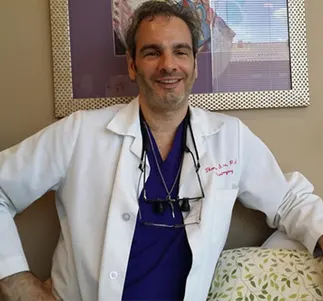
Thomas Pulice, PA-C has treated some of the most complex and high-performance cases in Las Vegas, including performers and entertainers for whom maintaining appearance, comfort, and career are equally urgent. His approach combines clinical precision with an understanding of what’s at stake when breast implant complications disrupt daily life — or a livelihood.
What sets LVA apart:
• Focused ESWT technology (not radial pulse) — penetrates deeper for more targeted capsule treatment
• Personalized protocol: treatment intensity starts lower and increases progressively across sessions, matching the biology of capsule disruption
• Experience across all major implant types and brands — saline, silicone, smooth, and textured
• Early-intervention focus: treating Grade I and II proactively prevents progression to surgical territory
• Serves Las Vegas entertainment industry professionals who require discretion, efficiency, and zero downtime
• Out-of-town patient-friendly: all six sessions completable within one week
• Free consultation with no obligation to proceed
This treatment is appropriate for women who:
• Have breast implants and notice increasing firmness, tightness, or shape changes
• Have been diagnosed with Grade I or Grade II capsular contracture (Grade III may also respond — consultation required)
• Want to avoid or delay revision surgery
• Are post-op patients looking for preventative therapy before encapsulation develops
• Have previously had surgical revision and want to reduce recurrence risk
• Are high-risk patients due to implant history, placement above the muscle, or prior capsule formation
Grade III capsular contracture is a gray zone, and the honest answer is: it depends. How severe is the capsule? How long has it been developing? A recently formed, lower-end Grade III may still respond to ESWT. A long-standing, high-severity Grade III is unlikely to. Tom will assess your specific situation during consultation and give you a straight answer rather than take you through a treatment course that isn’t likely to work. Grade IV contracture is a surgical case, full stop. ESWT is not an effective treatment at that stage.
- Softens and releases hardened capsule tissue
- Restores natural implant shape and mobility
- Reduces pain, tightness, and discomfort
- No surgery, anesthesia, or incisions
- No medications or prescriptions required
- Zero downtime — resume normal activity same day
- Outcomes depend on grade, severity, and duration — honest assessment at consultation
- Slows and inhibits future capsule formation
- Stimulates new blood vessel growth (angiogenesis)
- Antimicrobial benefits address root causes
- Safe on all major implant brands
- Fraction of the cost of revision surgery
Below are the most common questions clients ask before their Shockwave Breast Encapsulation Treatment appointment. Every treatment is customized for natural, comfortable results, so you always know what to expect.
What is capsular contracture and how common is it after breast augmentation?
Capsular contracture occurs when the scar tissue (capsule) that naturally forms around a breast implant becomes abnormally thick, tight, and constricting. Studies estimate 10–20% of breast augmentation patients will develop some degree of capsular contracture. It typically appears within the first two years after surgery, though it can develop at any time. The condition is graded on the Baker Scale from Grade I (soft, normal appearance) to Grade IV (hard, painful, significantly distorted). Las Vegas, with one of the highest breast augmentation rates in the U.S., sees a significant volume of capsular contracture cases among local residents and entertainment industry professionals.
Can shockwave therapy treat capsular contracture without surgery?
Yes, for the right patients. Focused Extracorporeal Shockwave Therapy (ESWT) is a clinically validated non-surgical option for Baker Grade I and Grade II capsular contracture, where it produces reliable results. Grade III is more nuanced — outcomes depend heavily on how severe the capsule is and how long it has been developing. A recently formed, lower-severity Grade III may still respond; a long-standing, high-severity Grade III typically will not. Grade IV contracture is a surgical case; ESWT is not the right tool at that stage. This is exactly why early intervention matters: treating Grade I and II before the capsule matures keeps patients out of surgical territory altogether.
Is there clinical proven evidence?
“Published preliminary clinical evidence suggests extracorporeal shock wave therapy may help reduce pain and soften fibrotic capsule tissue in selected breast implant encapsulation cases.”
Reference: Heine N, Prantl L, et al. Extracorporeal shock wave treatment of capsular fibrosis after mammary augmentation – Preliminary results. Aesthetic Plast Surg. 2013. PMID: 23384126.
How many shockwave treatments are needed for breast encapsulation?
A standard protocol at Las Vegas Aesthetics involves six sessions of approximately 15–20 minutes each, spaced 1–2 days apart and completed within 6–10 days. Treatment intensity begins at lower settings and increases progressively across sessions — an approach shown to reduce capsule formation more effectively than uniform-intensity delivery. Out-of-town patients can complete the full six-session course during a single Las Vegas visit. Note: Grade III and Grade IV cases are evaluated individually; Tom will advise during consultation whether shockwave therapy is a reasonable option for your specific situation.
Does shockwave therapy for capsular contracture hurt?
Most patients find the treatment comfortable and well-tolerated. Unlike closed capsulotomy (manual external manipulation), which can be quite painful, ESWT delivers gentle acoustic pulses that the majority of patients describe as a mild tapping or pressure sensation. No anesthesia is required, and patients return to normal activities immediately following each session.
What is the difference between focused shockwave therapy and radial pulse therapy for breast encapsulation?
These are two different technologies, though both are sometimes called ‘shockwave.’ Focused ESWT (used at Las Vegas Aesthetics) concentrates acoustic energy at a precise depth within the tissue, allowing it to reach the capsule surrounding the implant more effectively. Radial pulse therapy disperses energy outward from the surface, making it less precise for deep tissue targets like the breast capsule. For capsular contracture treatment, focused ESWT is the preferred modality.
Is shockwave therapy safe for all breast implant types?
Yes. Focused shockwave therapy has been safely used on patients with saline implants, silicone gel implants, smooth-shell implants, and textured implants across all major implant brands. The acoustic energy targets the surrounding capsule tissue, not the implant itself.
When should I start treatment for breast encapsulation?
The earlier, the better. Grade I and Grade II capsular contracture respond most favorably to ESWT because the capsule is still immature and more responsive to tissue remodeling. Early-stage treatment may prevent progression to Grade III or IV altogether. Patients who begin noticing firmness or tightness — even mild changes — are encouraged to schedule a consultation without waiting for symptoms to worsen.
Can shockwave therapy prevent capsular contracture after breast augmentation surgery?
Yes. Preventative ESWT is an appropriate option for high-risk patients — including those with a history of capsule formation, implants placed above the pectoralis muscle (submammary placement), or prior revision surgery. Initiating treatment proactively in the early post-operative period can disrupt the formation of immature capsules before they thicken. Tom Pulice, PA-C offers personalized preventative protocols for qualifying patients at Las Vegas Aesthetics.
How does shockwave therapy compare to capsulectomy or capsulotomy surgery?
Surgical options for capsular contracture include capsulotomy (scoring or releasing the capsule) and capsulectomy (partial or complete removal of the capsule, sometimes with the implant). These procedures require general anesthesia, surgical incisions, recovery time, and carry standard surgical risks. Focused shockwave therapy is a proven non-invasive first-line option for Grade I and II. For Grade III, whether ESWT is worth attempting depends on the severity and duration of the capsule — Tom will assess this honestly at consultation rather than put you through sessions unlikely to produce results. Grade IV is a surgical case, and he’ll tell you that
directly too.
How much does shockwave therapy for breast encapsulation cost in Las Vegas?
Pricing at Las Vegas Aesthetics is competitive and significantly more affordable than surgical revision. An exact treatment investment is provided during your free consultation, as the protocol (number of sessions, intensity) is tailored to each patient’s grade and goals. Financing options are available. Call 725-527-8211 or book online to schedule your complimentary consultation.