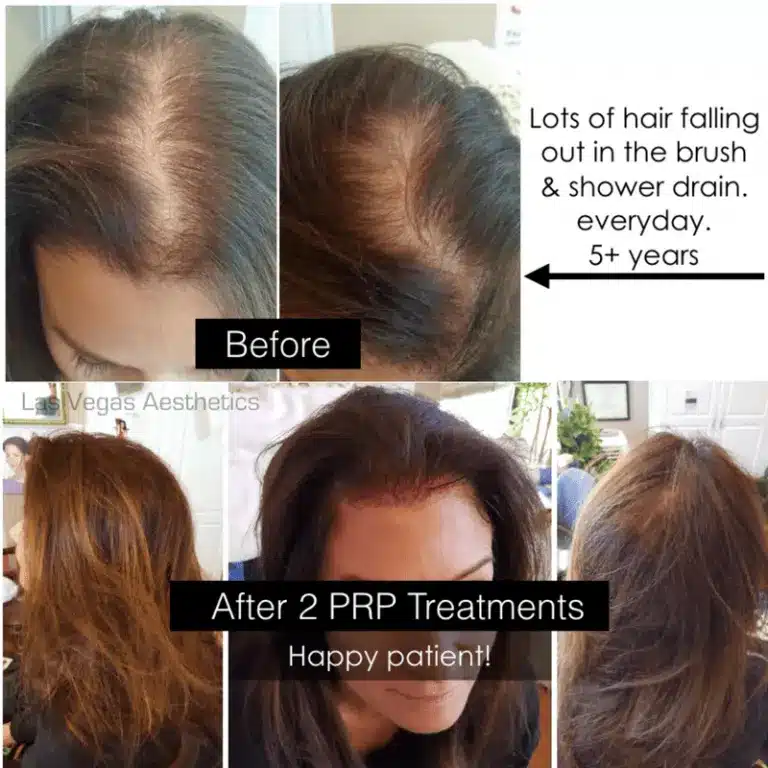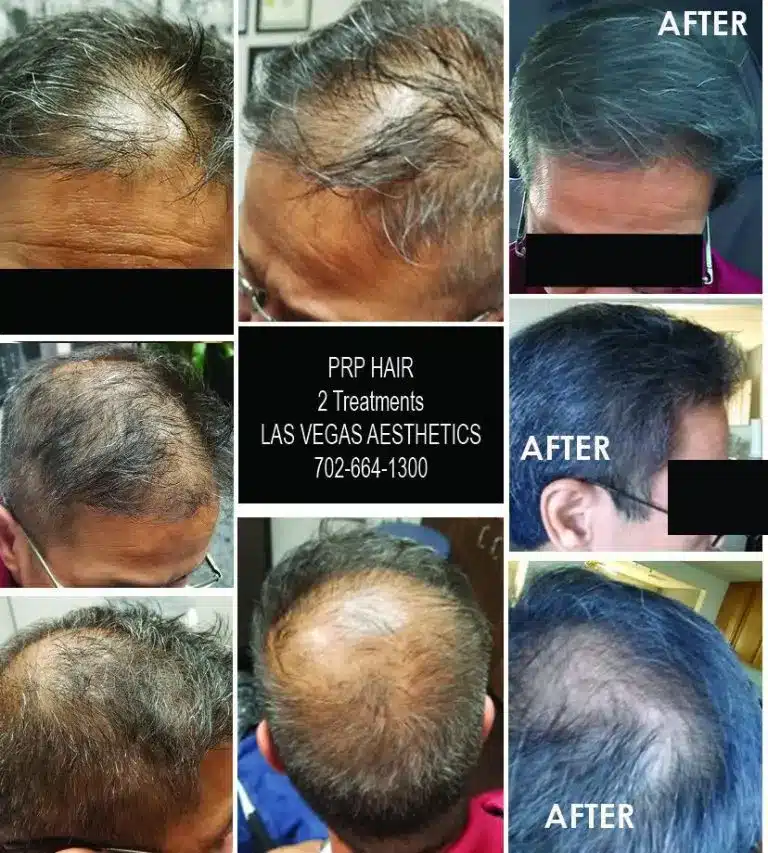
More Blood. More Growth Factors. Better Results.
FullDose PRP™: 120cc Protocol with Full Adjunct Therapy
Most PRP hair restoration clinics draw 20–30cc of blood for their treatment. At Las Vegas Aesthetics, Thomas Pulice, PA-C draws 120cc — producing a significantly higher concentration of platelets and growth factors than any other provider in the Las Vegas area.
More growth factors mean a more powerful biological signal to your hair follicles. And a stronger signal means better outcomes.
PRP remains the gold standard in non-surgical hair restoration — the most clinically validated, most studied, and most effective regenerative option available for hair loss. Tom’s protocol layers PRP with low-level laser therapy, scalp microneedling, compounded topicals, and targeted nutraceuticals to create the most comprehensive non-surgical hair restoration program in Las Vegas.
That authority is backed by an unusual depth of clinical history. Thomas Pulice, PA-C has been working with platelet-rich plasma since 1998 — not in aesthetics, but in cardiothoracic surgery in New York, where platelets were used to accelerate healing in some of the most complex surgical cases in medicine. That foundation gives Tom a command of PRP biology that goes well beyond what most aesthetic injectors bring to the field. It’s also why CBS and ABC News have called on him as an expert guest to explain PRP and Vampire procedures to their audiences — because when national media needs someone who actually knows the science, they call Tom.

Platelet-rich plasma therapy has been used in orthopedics, wound healing, and sports medicine for decades. Its application to hair loss is one of the most well-studied areas in regenerative aesthetics — with hundreds of peer-reviewed studies supporting its effectiveness for androgenetic alopecia (pattern hair loss) in both men and women.
Unlike topical treatments that sit on the surface, PRP is injected directly into the scalp at the level of the hair follicle. The concentrated growth factors — including PDGF, VEGF, EGF, and IGF — act as a powerful biological signal that:
• Reactivates dormant hair follicles that have stopped producing hair
• Extends the anagen (active growth) phase of the hair cycle
• Improves blood supply and oxygen delivery to the follicle
• Reduces the inflammation that drives follicle miniaturization
• Strengthens existing hair and increases shaft diameter
No other non-surgical treatment delivers growth factors directly to the follicle at this concentration. That’s why PRP remains the highest-caliber hair restoration option available without surgery.
PRP concentration matters. The more platelets you concentrate, the more growth factors you deliver, and the stronger the biological response at the follicle level. This is not a minor variable — it directly affects what patients experience.
The standard PRP draw at most hair restoration clinics is 20–30cc of blood. Tom draws 120cc — four to six times the volume used by most providers. This produces a substantially higher platelet yield, which translates to a richer, more potent PRP preparation injected into your scalp.
FullDose PRP™: 120cc blood draw — believed to be the highest-volume PRP protocol available in the Las Vegas area.
More platelets. More growth factors. A stronger signal to your follicles.
When comparing PRP providers in Las Vegas, ask one question: how much blood do they draw? The answer tells you a lot about the quality of treatment you’ll receive.
Tom’s approach goes well beyond the injection itself. Every patient receives a fully integrated protocol designed to maximize results at every stage of the hair growth cycle:
• The Foundation — 120cc PRP Draw & Scalp Injections
• Growth factors delivered via 80–100 precisely targeted scalp injections, administered under a full ring block protocol — topical numbing cream followed by 2% lidocaine for complete global anesthesia of the scalp. Most clinics use topical numbing only; Tom’s ring block approach provides dramatically superior comfort across both the injection phase and subsequent microneedling.
• Laser Therapy —
• LaserCap® Therapy — Low-Level Laser Therapy (LLLT)
• LVA uses the LaserCap® — the premier FDA-cleared LLLT device in the industry — both in-office and prescribed for daily take-home use. LaserCap® delivers photobiomodulation directly to the scalp via 240-304 laser diodes, enhancing cellular energy production (ATP), stimulating follicle metabolism, and improving scalp circulation between PRP sessions. Unlike lower-grade LED devices marketed as LLLT, LaserCap® uses true laser diodes for consistent therapeutic wavelength delivery at 650nm — the clinically validated frequency for follicle stimulation. Daily home use between sessions sustains the biological environment PRP creates, compounding results over time.
• Microneedling — Scalp Microneedling
• Creates micro-channels that enhance PRP absorption and stimulate the scalp’s own healing response at the dermal layer
• Prescription Topicals — Compounded Topical Minoxidil
• LVA prescribes Formula 82M — a medical-strength compounded minoxidil formulation developed specifically for hair loss and widely regarded as one of the most effective topical options available. Unlike over-the-counter minoxidil (Rogaine), Formula 82M uses a propylene glycol-free base that eliminates the scalp irritation and greasiness that causes most patients to abandon standard minoxidil. Prescribed for daily take-home use, it works continuously between PRP sessions to maintain follicle stimulation and slow the androgen-driven miniaturization that causes pattern hair loss.
• Nutritional Support — Oral Nutraceuticals
• Scientifically validated, targeted supplement protocols to address the nutritional deficiencies most commonly associated with hair thinning and follicle decline – with a money back guarantee.
Initial series: 3 sessions spaced 6–8 weeks apart. Maintenance sessions and adjunct therapies ongoing based on individual response.
PRP hair restoration is effective for both men and women experiencing hair thinning or early-to-moderate pattern hair loss. The same protocol is used for both, customized to the individual’s loss pattern and scalp condition.
Best candidates include:
• Men with early to moderate androgenetic alopecia (male pattern baldness)
• Women with diffuse thinning or female pattern hair loss
• Patients experiencing hair loss from stress, hormonal changes, medications – including Ozempic®, postpartum shedding, or nutritional deficiency
• Anyone who wants to slow or halt ongoing hair loss before it progresses
• Patients who have had hair transplant surgery and want to optimize graft survival and density
• High-risk individuals who want to begin preventative treatment before significant loss occurs
Candidacy is assessed individually at consultation. Tom evaluates scalp health, hair loss pattern, follicle viability, and overall health history to determine whether PRP is the right approach and what the realistic expectations are for your specific situation. There is no one-size-fits-all answer — and Tom will tell you honestly if PRP is unlikely to produce meaningful results for your case.
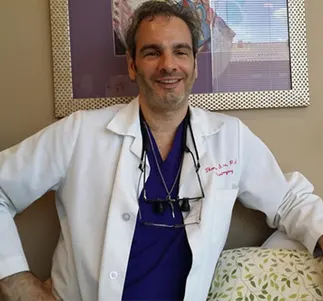
Tom’s relationship with platelet-rich plasma didn’t start in a med spa — it started in 1998 in a New York cardiothoracic surgery suite, where PRP was used to promote tissue healing in some of the most critical surgical cases in medicine. That’s over 25 years of hands-on experience with platelet biology at the highest clinical level, long before PRP became a mainstream aesthetic procedure.
That depth of knowledge is recognized nationally. Tom has been invited as a guest expert on CBS and ABC News to speak about PRP and Vampire procedures — called upon by national media because his clinical background and real-world results make him one of the most authoritative voices on regenerative aesthetics in the country.
When you sit down with Tom for a PRP hair consultation, you’re not talking to someone who completed a weekend certification. You’re talking to a clinician who has spent more than two decades understanding how platelets work at a biological level — and who applies that knowledge to every treatment plan he builds.
- FullDose PRP™ — 120cc draw, highest PRP volume in Las Vegas
- Reactivates dormant hair follicles
- Increases hair density and shaft thickness
- Slows and halts ongoing hair loss
- No surgery, no general anesthesia
- Zero downtime — resume normal activity same day
- Full adjunct protocol: LLLT, microneedling, topicals, nutraceuticals
- Treats both male and female hair loss patterns
- Uses your own biology — no synthetic growth factors
- 3-session initial series, 6–8 weeks apart
- Full ring block anesthesia — topical + 2% lidocaine for near-painless treatment
- Honest candidacy assessment — no treatment if results are unlikely
Below are the most common questions clients ask before their PRP Restoration Treatment appointment. Every treatment is customized for natural, comfortable results, so you always know what to expect.
What is PRP hair restoration and how does it work?
PRP (platelet-rich plasma) hair restoration is a non-surgical treatment that uses concentrated growth factors from your own blood to stimulate dormant hair follicles and promote natural hair regrowth. A blood draw is processed in a centrifuge to separate and concentrate the platelets, which are then injected directly into targeted areas of the scalp. The growth factors in PRP — including PDGF, VEGF, EGF, and IGF — signal the follicle to reactivate, extend its active growth phase, and improve blood supply to the scalp. At Las Vegas Aesthetics, a 120cc blood draw is used — significantly higher than the 20–30cc standard at most clinics — producing a more concentrated, more potent PRP preparation.
Is PRP still the best non-surgical hair restoration treatment available?
Yes. Despite the emergence of newer technologies, PRP remains the most clinically validated and extensively studied non-surgical hair restoration option available. Hundreds of peer-reviewed studies support its effectiveness for androgenetic alopecia in both men and women. No other non-surgical treatment delivers biological growth factors directly to the follicle at this concentration. At Las Vegas Aesthetics, PRP is used as the foundation of a comprehensive protocol that includes low-level laser therapy, scalp microneedling, compounded topicals, and targeted nutraceuticals — addressing hair loss from every angle simultaneously.
Why does blood draw volume matter for PRP hair restoration?
PRP concentration is directly tied to how much blood is drawn and processed. More blood means more platelets concentrated into the final PRP preparation, and more platelets means a higher density of growth factors delivered to the scalp. Most PRP providers draw 20–30cc of blood. Las Vegas Aesthetics draws 120cc’s under the FullDose PRP™ protocol — believed to be the highest-volume PRP approach available in the Las Vegas area. This difference in concentration produces a substantially stronger biological signal to the hair follicle, which is a meaningful clinical variable in treatment outcomes.
How many PRP hair restoration treatments do I need?
The standard initial series at Las Vegas Aesthetics is three sessions spaced 4–6 weeks apart. This timeline aligns with the hair growth cycle and allows each session to build on the follicle stimulation from the previous one. After the initial series, maintenance sessions are scheduled based on individual response — typically once or twice per year, if that. Adjunct therapies including LLLT, topicals, and nutraceuticals are ongoing between sessions to sustain results.
When will I see results from PRP hair restoration?
Hair growth is a slow biological process. Most patients begin noticing reduced shedding within 4–6 weeks of their first session. Visible improvements in density and thickness typically appear between 3–6 months as follicles re-enter the active growth phase and new hair matures. Full results from the initial three-session series are generally assessed at 6 months. Results vary based on the degree of hair loss, how long follicles have been dormant, and how consistently adjunct therapies are used between sessions.
Does PRP hair restoration work for both men and women?
Yes. Las Vegas Aesthetics treats both male pattern baldness (androgenetic alopecia) and female hair thinning using the same 120cc PRP protocol, customized to each patient’s specific loss pattern and scalp condition. PRP is effective for the diffuse thinning pattern common in women as well as the more localized recession and crown thinning seen in men. It is also used for hair loss from hormonal changes, postpartum shedding, stress, and nutritional deficiency in both sexes.
Is PRP hair restoration painful?
This is one of the most common concerns patients have — and it’s a legitimate one. A full FullDose PRP™ session involves 80 to 100 individual scalp injections followed by microneedling. At most clinics, a topical numbing cream is the only anesthetic used. Topical numbing has limited penetration into the scalp and does very little to reduce the discomfort of that many injections at depth. At Las Vegas Aesthetics, Tom uses a full scalp ring block: topical numbing cream is applied first, followed by an injection of 2% lidocaine that creates complete global anesthesia across the entire top of the scalp. This is the same approach used in surgical and dental procedures — it works, and it works significantly better than topical numbing alone. Most patients feel very little during the injection phase and are comfortable throughout the microneedling as well. Post-treatment, the scalp may feel slightly tender for 24–48 hours. There is no significant downtime.
Who is not a good candidate for PRP hair restoration?
PRP works by stimulating follicles that are weakened or dormant but still viable. Areas of the scalp where follicles are completely gone — such as slick, smooth bald patches with no fine hair visible — are unlikely to respond to PRP. Beyond that, candidacy is assessed individually at consultation. Tom evaluates hair loss pattern, scalp health, follicle viability, and overall health history, and will give you an honest assessment of what PRP can realistically achieve for your specific case. If PRP is unlikely to produce meaningful results, he will tell you.
How does PRP compare to hair transplant surgery?
Hair transplant surgery (FUE or FUT) physically moves hair follicles from a donor area to thinning zones and is the most permanent solution for significant hair loss. PRP is non-surgical and works by stimulating existing follicles rather than relocating them — making it best suited for early-to-moderate hair loss where viable follicles are still present. The two approaches are not mutually exclusive: PRP is often used alongside or after transplant surgery to improve graft survival and optimize density. For patients who are not ready for surgery, or who want to slow progression before considering it, PRP is the strongest non-surgical option available.
How much does PRP hair restoration cost in Las Vegas?
Pricing at Las Vegas Aesthetics is based on the full protocol — including the 120cc draw, adjunct therapies, and treatment plan — and is provided during your complimentary consultation. Financing options are available. To schedule your free assessment, call 725-527-8211 or book online at https://lvaesthetics.simplespa.com/.
Why should I choose Las Vegas Aesthetics for PRP hair restoration?
Several things set Las Vegas Aesthetics apart from other PRP hair restoration providers in the area. First, the FullDose PRP™ protocol uses a 120cc blood draw — believed to be the highest volume available in Las Vegas, producing significantly more concentrated PRP than the 20–30cc draws standard at most clinics. Second, every session includes a full scalp ring block — topical numbing followed by 2% lidocaine injected around the scalp perimeter — providing complete global anesthesia across all 80 to 100 injection sites and the subsequent microneedling. Most clinics use topical numbing only. Third, Thomas Pulice, PA-C has been working with platelet-rich plasma since 1998 in cardiothoracic surgery in New York — over 25 years of platelet biology experience before he ever applied it to hair restoration. That clinical depth is recognized nationally: Tom has appeared as a guest expert on CBS and ABC News to speak about PRP and Vampire procedures. When you choose Las Vegas Aesthetics, you’re choosing the highest-volume protocol, the most comfortable treatment experience, and one of the most experienced PRP clinicians in the country.